75–250 ppm
SCA target TDS for brewing water (ideal 150), with hardness 50–175 ppm and alkalinity 40–75 ppm.
Source: Specialty Coffee Association water standard (as summarized by Third Wave Water)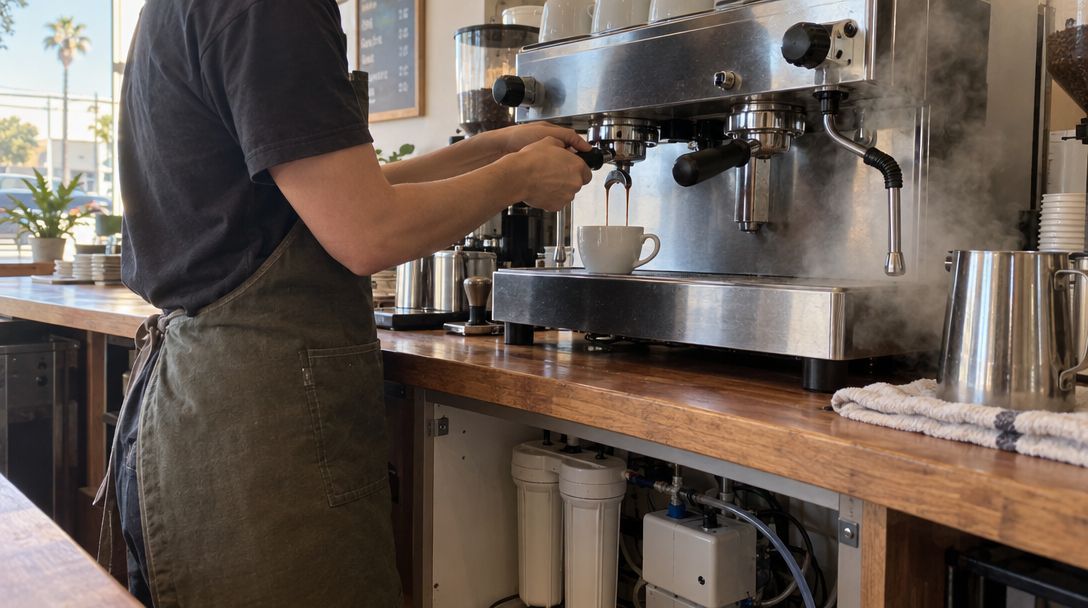
Cafés, roasters & espresso bars
Water₂O dials your water into the Specialty Coffee Association window, so every shot tastes right and your espresso machine stops needing descaling.
75–250 ppm
SCA target TDS for brewing water (ideal 150), with hardness 50–175 ppm and alkalinity 40–75 ppm.
Source: Specialty Coffee Association water standard (as summarized by Third Wave Water)$300+
A typical espresso-machine service visit; a heavily scaled boiler can mean a full teardown and days of downtime.
Source: Calioh Coffee, espresso machine repair guide9–16 grains
Typical Los Angeles hardness by neighborhood, well above the SCA range for coffee.
Source: LADWP water-quality FAQ, 2022 hardness by areaThe problem
The plan
Every café is different. We test your tap water, then design around your machines, volume and the water your roaster expects.
What changes
Hardness and alkalinity in the SCA window.
Far less scale on boilers, elements and group heads.
Descaling teardowns and emergency calls fall off.
The same water feeds ice machines and steam wands.
Run your numbers
Service & downtime per year
Service visits, descaling and the days the machine is down. Estimate. Treated water does not remove all service needs, but scale is the usual reason for them. We’ll show the math for your site in the quote.
Good questions
Pure RO does. We blend or remineralize so the water lands in the SCA range, not at zero.
Yes. One treatment plan can feed espresso, drip, ice and the hot-water tower.
Usually every 6–12 months depending on volume; a care plan handles it.
The opposite. Most manufacturers require filtered, scale-controlled water.
Yes. Compact under-counter or back-room systems with a bypass, nothing structural.