7 bbl : 1 bbl
Water used per barrel of beer at a typical U.S. brewery; the best run under 3:1.
Source: Brewers Association water usage resources
Breweries & taprooms
Water₂O builds you a clean, repeatable water baseline so your water chemistry, your boiler and your glycol system all behave.
7 bbl : 1 bbl
Water used per barrel of beer at a typical U.S. brewery; the best run under 3:1.
Source: Brewers Association water usage resources20–25%
Boiler efficiency lost to just 1/8 inch of scale, heat that goes up the stack.
Source: National Board of Boiler & Pressure Vessel Inspectors5–17 grains
Hardness range across Los Angeles neighborhoods, so the same recipe sees different water.
Source: LADWP water-quality FAQ, 2022 hardness by areaThe problem
The plan
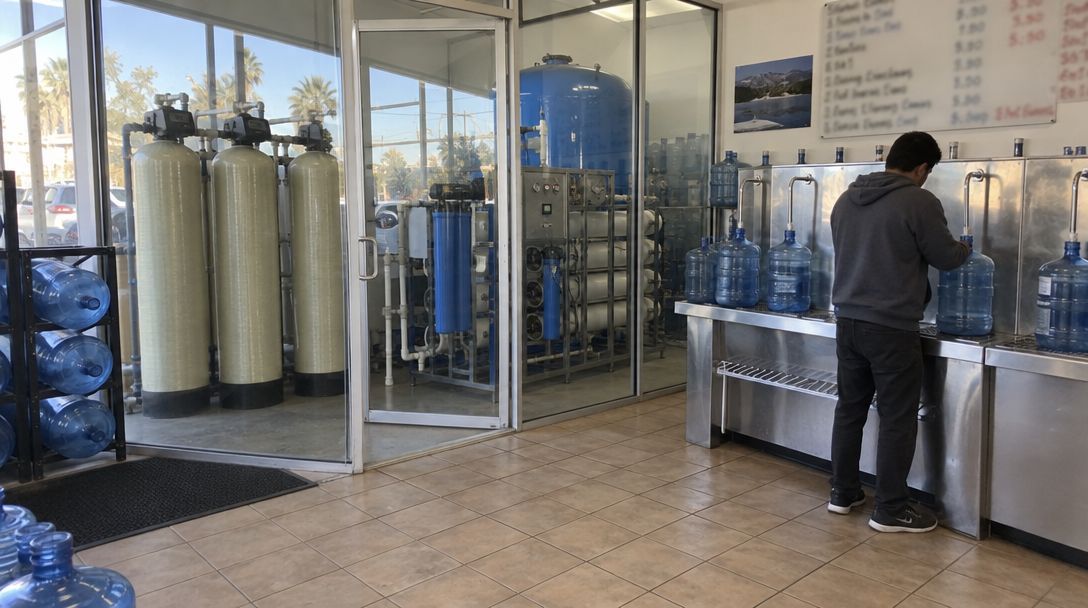
Every brewhouse is different. We size the RO, storage and blending to your batch size, brew days and local water.
What changes
Start every brew from the same low-mineral baseline.
Chlorine and chloramine removed before the mash.
Less scale on kettles, HLT coils, heat exchangers and boiler.
Low-TDS rinse water dries clean on glass, kegs and tanks.
Run your numbers
At risk per year
A dumped or blended-away batch is the real price of inconsistent water. Estimate. Your numbers, your math. Brewing water, boiler feed and rinse water are sized separately in the quote. We’ll show the math for your site in the quote.
Good questions
Yes. RO gives you a near-blank slate; you build each style's profile from there instead of correcting unknown city water.
Yes. Softened or RO make-up water for the boiler and chiller loop is part of the same plan.
We size production and storage to your brew day, typically a tank filled overnight so brew day never waits.
Commercial RO runs 50–75% recovery; we tune it to your water and can route the reject to cleaning or landscaping where allowed.
Water₂O services the filters, membranes and softener on a care plan, so your brewers brew.