10–30 ppm
Rinse-water TDS that reliably dries spot-free; spotting becomes visible around 50 ppm on dark finishes.
Source: AMPAC USA, RO for car washes (spot-free thresholds)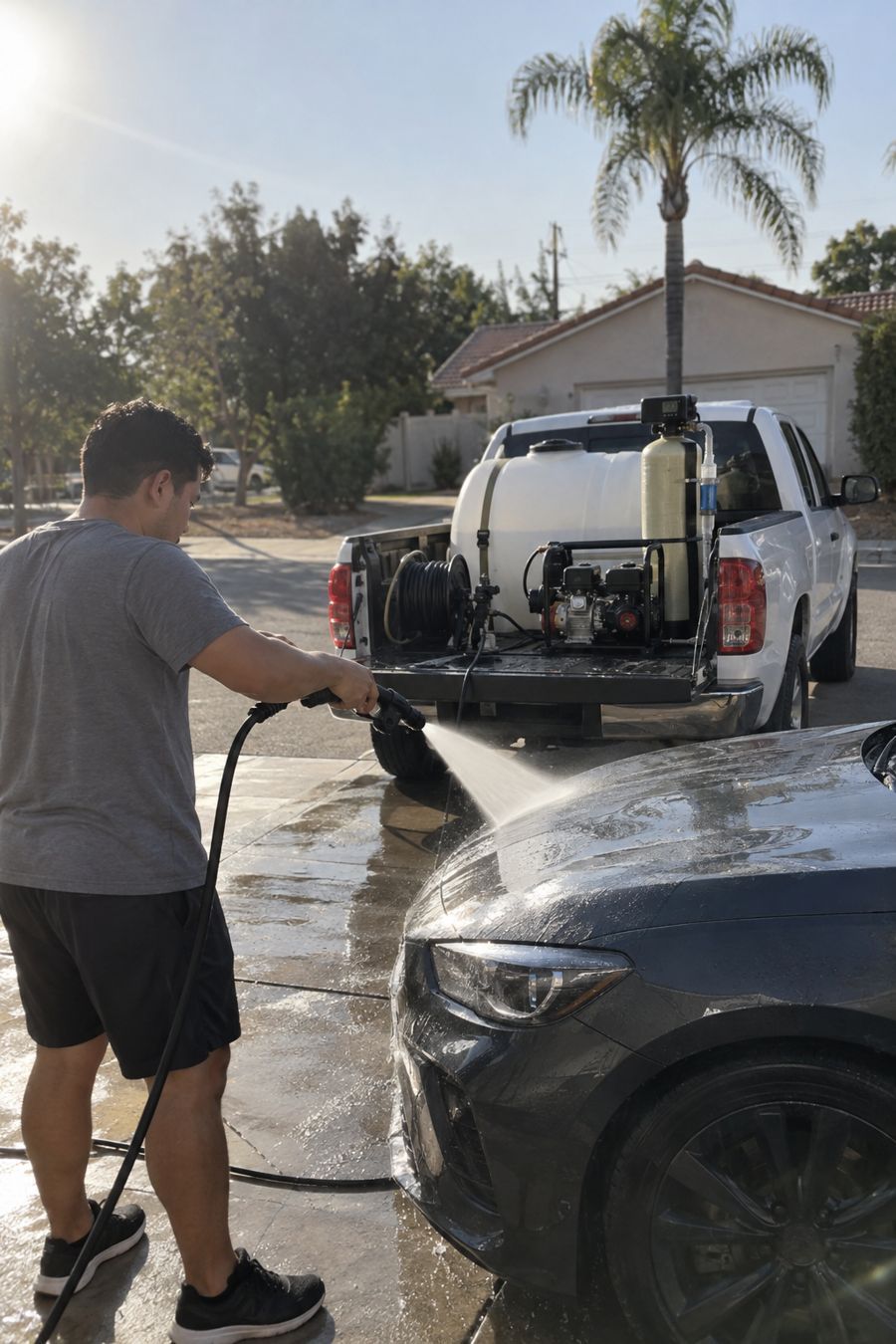
Mobile car wash trailers, detailing vans & fleet-wash trucks
Water₂O mounts a DI system on your rig and sets up fill-side filtration, so the water in your 300-gallon tank rinses spot-free, you skip the towel-dry, and every job finishes faster.
10–30 ppm
Rinse-water TDS that reliably dries spot-free; spotting becomes visible around 50 ppm on dark finishes.
Source: AMPAC USA, RO for car washes (spot-free thresholds)~10×
Resin cost of DI-only versus RO-then-DI over the same water volume, by one operator's accounting; the reason to fill from RO when you can.
Source: Window Cleaning Resource forum, DI vs RO/DI operating costs9–16 grains
Typical Los Angeles hardness by area, which is what the DI resin has to remove.
Source: LADWP water-quality FAQ, 2022 hardness by areaThe problem
The plan
Every rig is different. We size the DI tank, prefilters and plumbing to your tank, pump and the water you fill from, and set up a resin-swap schedule.
What changes
Spot-free rinse dries clean on its own.
Minutes saved per car, more cars per day.
No water spots on the customer's hood the next morning.
TDS checks and resin swaps on a care plan.
Run your numbers
Fills per resin swap
Your tank, your water, your car count. Estimate. Resin capacity assumed at 12,000 grains per cubic foot; your resin, water and rinse volume will differ. We’ll show the math for your site in the quote.
Good questions
Yes. A DI tank is a slim cylinder that mounts beside the water tank or pump; we plumb it inline with a bypass and a TDS meter.
The inline TDS meter creeps above 10 ppm; we swap or refill the resin on a schedule based on your fills, or on call.
Yes, through the prefilters; it just uses resin faster than filling from RO at your base, so most rigs do both.
Yes. An RO/DI fill station at your shop, yard or home base fills the tank overnight and makes resin last far longer.
Spot-free water prevents new spots; etched spots still need polishing, which this stops you from repeating.