Type I / II / III
ASTM D1193 reagent-water grades: Type I ≥18 MΩ·cm, Type II ≥1 MΩ·cm, Type III ≥0.05 MΩ·cm resistivity (specification summary).
Source: Puretec guide to ASTM D1193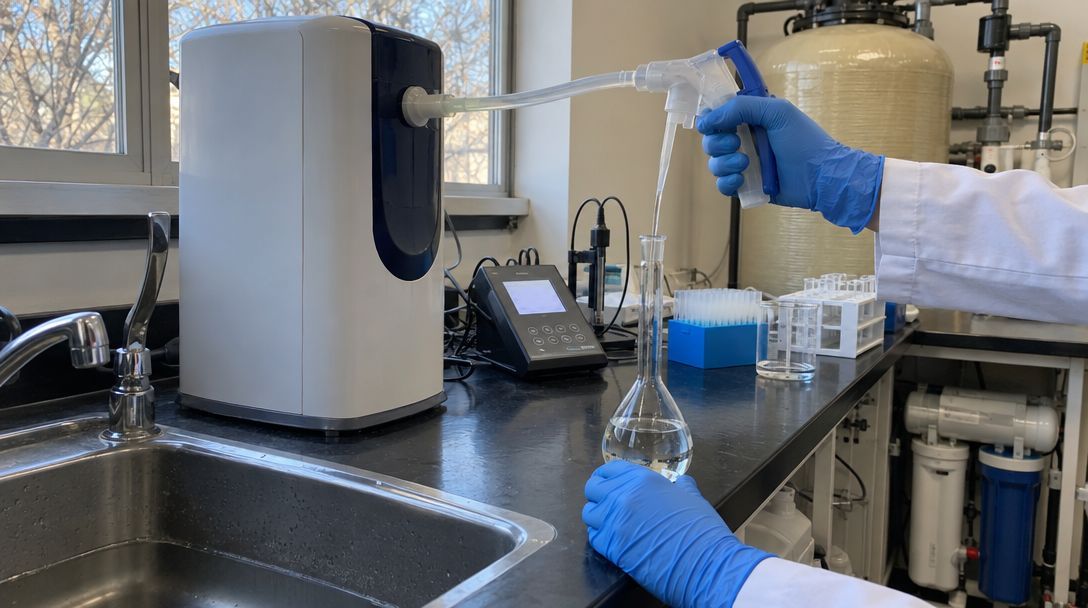
Research, clinical & QC labs
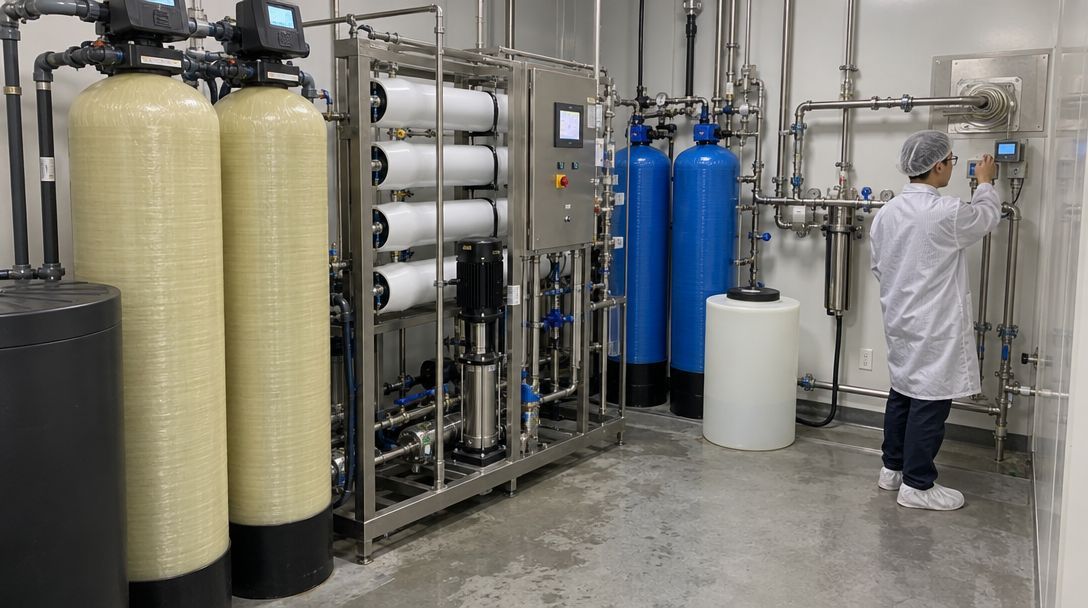
Water₂O builds the pretreatment and purification behind your Type III, Type II and polished Type I water, sized to your bench, your washer and your instruments.
Type I / II / III
ASTM D1193 reagent-water grades: Type I ≥18 MΩ·cm, Type II ≥1 MΩ·cm, Type III ≥0.05 MΩ·cm resistivity (specification summary).
Source: Puretec guide to ASTM D1193Pretreatment first
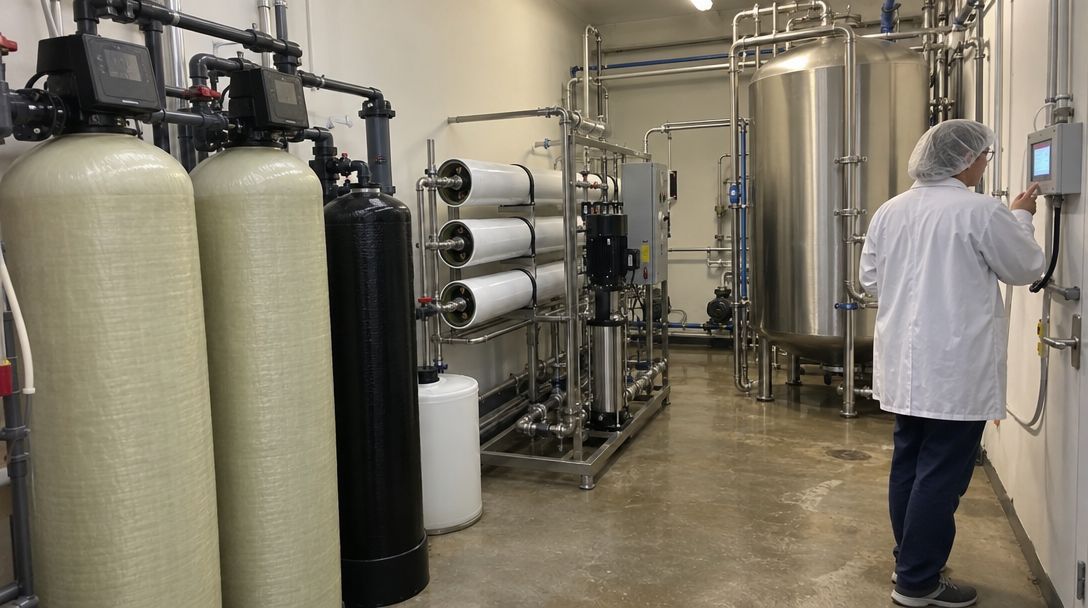
Sediment, carbon and softening protect downstream RO membranes and DI resin from chlorine, particulates and hardness.
Source: Lab water buying guide (CASRAI)9–16 grains
Los Angeles hardness by neighborhood; untreated, it is the main reason lab RO and DI consumables fail early.
Source: LADWP water-quality FAQ, 2022 hardness by areaThe problem
The plan
Every lab is different. We match grades to methods, map daily volume and peak draw, and leave validation to your QA.
What changes
A stable feed means your polishers hold spec.
Membranes, resin and polisher packs last longer behind proper pretreatment.
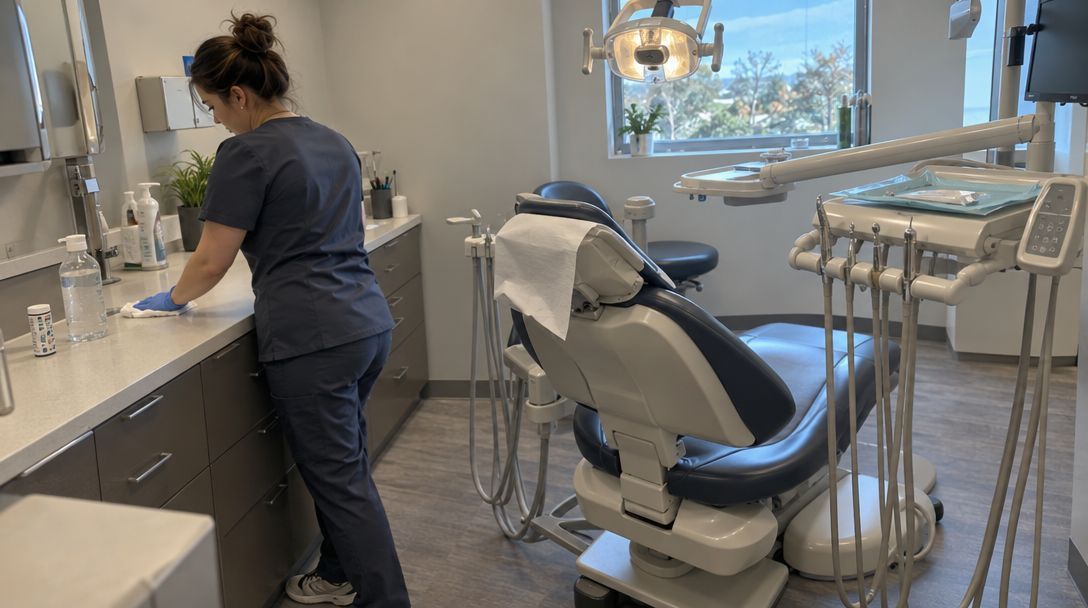
RO or DI final rinse for washers; no residue.
Storage and distribution sized to peak draw.
Run your numbers
Purchased water & resin exchanges per year
Bottled reagent water or resin-exchange tanks versus on-site RO/DI. Estimate. Many labs pay for both; enter what applies to you. We’ll show the math for your site in the quote.
Good questions
We build the pretreatment, RO and DI feed; your bench polisher makes Type I from that feed and keeps its own spec.
Yes, with RO or DI final-rinse water at the pressure and flow the washer needs.
We provide specs, test results and service logs; qualification and validation remain with your QA program.
Sealed tank with vent filter, repressurization pump and a loop or point-of-use drops; recirculation or UV as the grade requires.
Water₂O changes prefilters, membranes and resin and logs resistivity and TDS on a care plan.