Diagnostic
Salt in the tank but spots and dry skin are back? It is often a salt bridge. How to check, how to fix it safely, and how to keep it from coming back.
If your softener still has salt but your water feels hard again, the usual cause is a salt bridge: a hard crust across the brine tank that keeps water from reaching the salt. A broom handle finds it in two minutes. Below is how to check, how a bridge gets fixed, and how to keep it from coming back.
The text came in on a Monday afternoon. A homeowner in a brand new house in Brentwood had run a manual regeneration on her softener, the way the manufacturer's support line told her to. She sent us two videos. One showed water trickling out of a pipe on the side of the house. The other showed the control screen in the middle of a brine cycle.
The pipe was fine. That was the softener's drain line, and a slow stream there is normal while it regenerates. Then she sent the real problem: she had lifted the lid on the salt tank and found one dry, solid block of salt. No water anywhere. She had already poured water in with a hose, because that is what she had been told to do.
We asked her to hold off on adding any more and booked a visit. It was a salt bridge.
This is one of the most common questions we get, and it usually sounds like this: "There's salt in the tank. Why is my water hard again?"
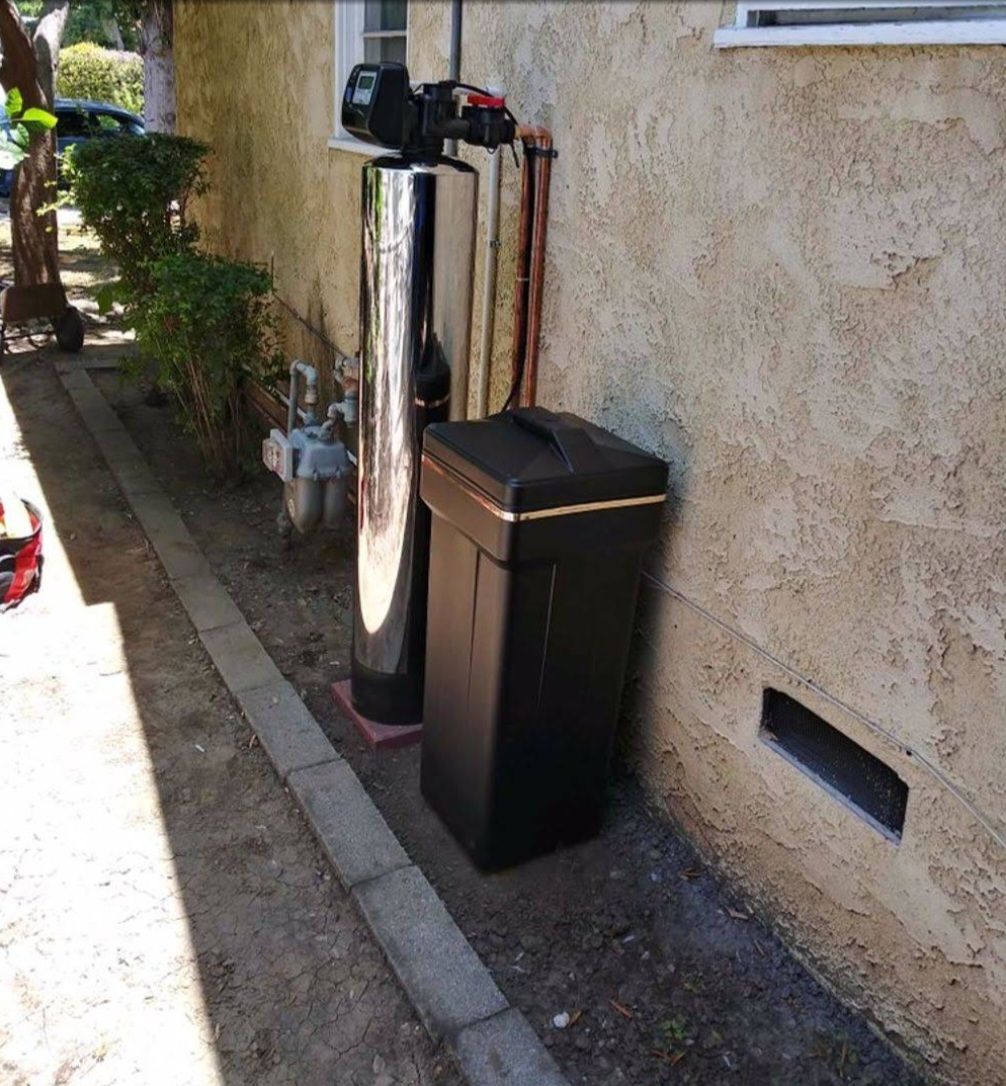
Your softener has two parts. The tall tank holds resin beads that pull hardness out of the water. The shorter tank next to it, the brine tank, holds the salt. Every so often the softener runs a regeneration. Water fills the bottom of the brine tank, dissolves some salt into brine, and that brine washes through the resin so it can soften again.
A salt bridge is a hard crust of salt that forms across the whole width of the brine tank. Underneath it there is brine and empty space. On top of it there is salt that looks perfectly normal. The water at the bottom never touches the salt up top, so no brine gets made, and the resin stops getting recharged. A Clean Water Center explainer (Jan 22, 2021) puts it simply: the crust creates a wall between the salt and the water, so hard water goes right back to your taps.
That's why it fools people. From above, the tank can look half full or more, GE Appliances notes. The salt is there. It just isn't doing anything.
You usually notice the water before you notice the tank. The Clean Water Center piece lists the giveaways:
In Los Angeles that change can be obvious. LADWP's own water quality FAQ puts the San Fernando Valley and Western Los Angeles at an average of 8.6 grains per gallon of hardness, with a range of 5.4 to 16.1 (2022 figures). By LADWP's guide, anything over 7 grains per gallon counts as hard. So when a softener quietly quits, most homes here feel it within a few days.
You need a broom handle and two minutes.
Go easy. GE warns against pounding on the tank or banging the walls, because that can crack it. If the crust is stubborn, GE suggests pouring in one gallon of warm water, not hot, to help it dissolve. One gallon. Not a hose.
The fix itself is not complicated. The Clean Water Center describes it as scooping out the loose salt above the crust, breaking the crust with a long handled tool, pulling out the big chunks, cleaning the tank, refilling it with the right amount of salt, and running a regeneration.
Here is what that looked like in Brentwood. A little background first. The builder's plumber had installed the softener but never filled it or programmed it. We came out in September, loaded the salt and set it up. A few weeks later the homeowner found the bridge.
On the second visit we broke up the crust and cleared the tank. The bridge most likely traced back to the valve's original settings, so we reset them. Then we tested the water, and the test came out perfect. We are going back in a week or two to test it again, just to be sure it stays that way.
If you're not comfortable digging around in a brine tank, or the bridge keeps coming back, that's a reasonable time to call someone. Our maintenance visits include a brine tank check and a valve calibration in the same trip.
Bridges don't usually happen at random. GE says the two most common causes are the wrong salt and high humidity. The Clean Water Center adds overfilling. So:
We have put in 1,000+ systems across Southern California, and the brine tank is the part almost nobody looks at until the water changes. Our post on water softener maintenance covers the rest of the yearly checklist, including salt types and cleaning the tank.
Sometimes the salt is loose all the way down and the water is still hard. Then it's something else: the softener may be in bypass, the settings may not match your water's hardness, or the system may simply be too small for the house. Those take a water test and a look at the valve to sort out.
If you're on the Westside, our Brentwood and Pacific Palisades pages show what's in the local water. And if you're shopping for a system for the first time, start with how a water softener actually works before anyone quotes you a size.
Not sure if your softener is doing its job? We'll come out, test your water in your home, and tell you straight what we find. No pressure. Call (310) 694-0220 or book a free in-home water test.
Water₂O offers free, no-obligation water testing throughout Los Angeles, Ventura, Orange, and Riverside Counties.
Schedule a Free Water Test